Role: UX Researcher
Industry: Consumer Goods & Services
Tools: Qualtrics, Miro
Date: Jan 2022 – Mar 2022
A product solution that helps Big W share product sustainability and traceability information with customers
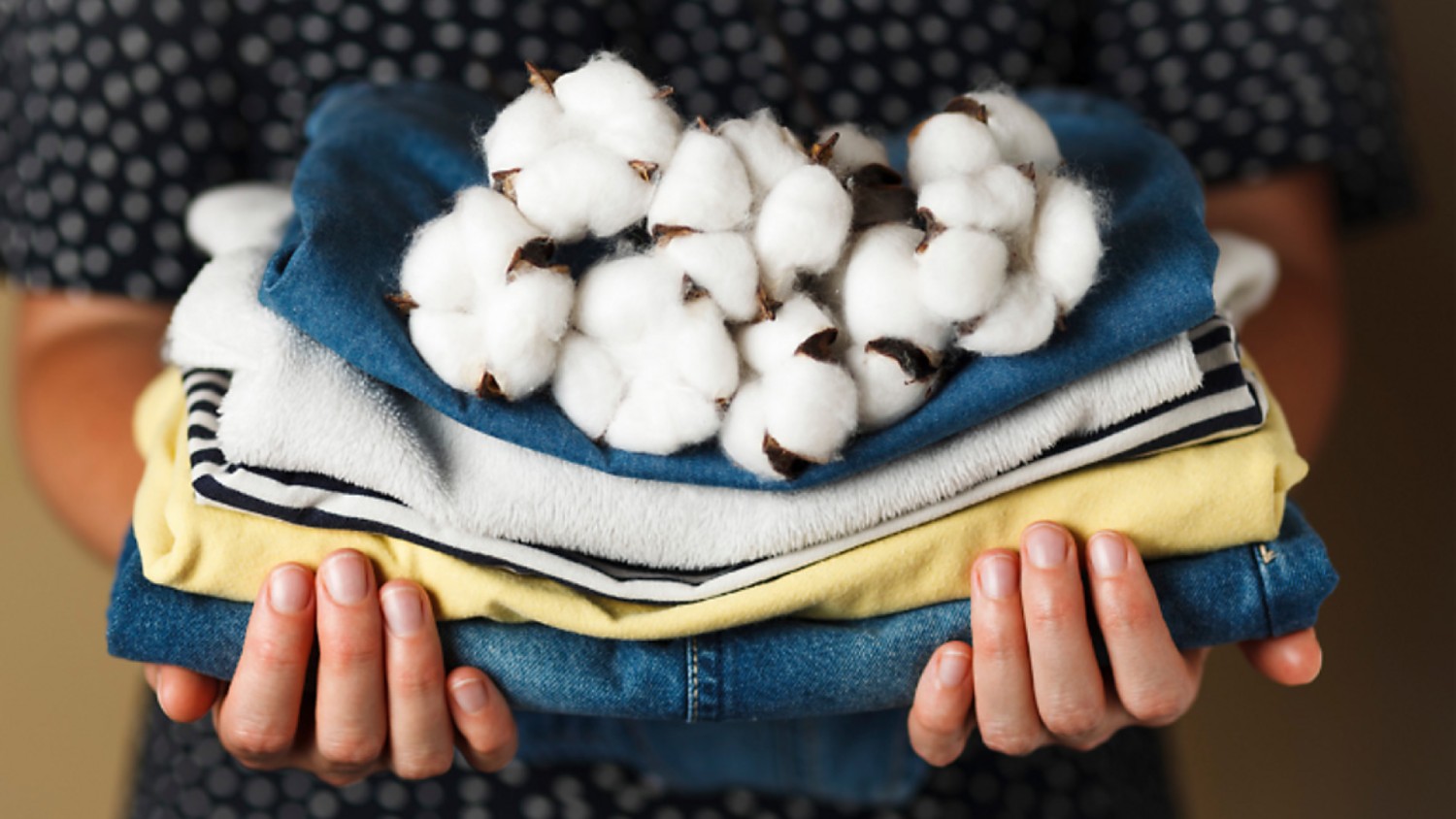
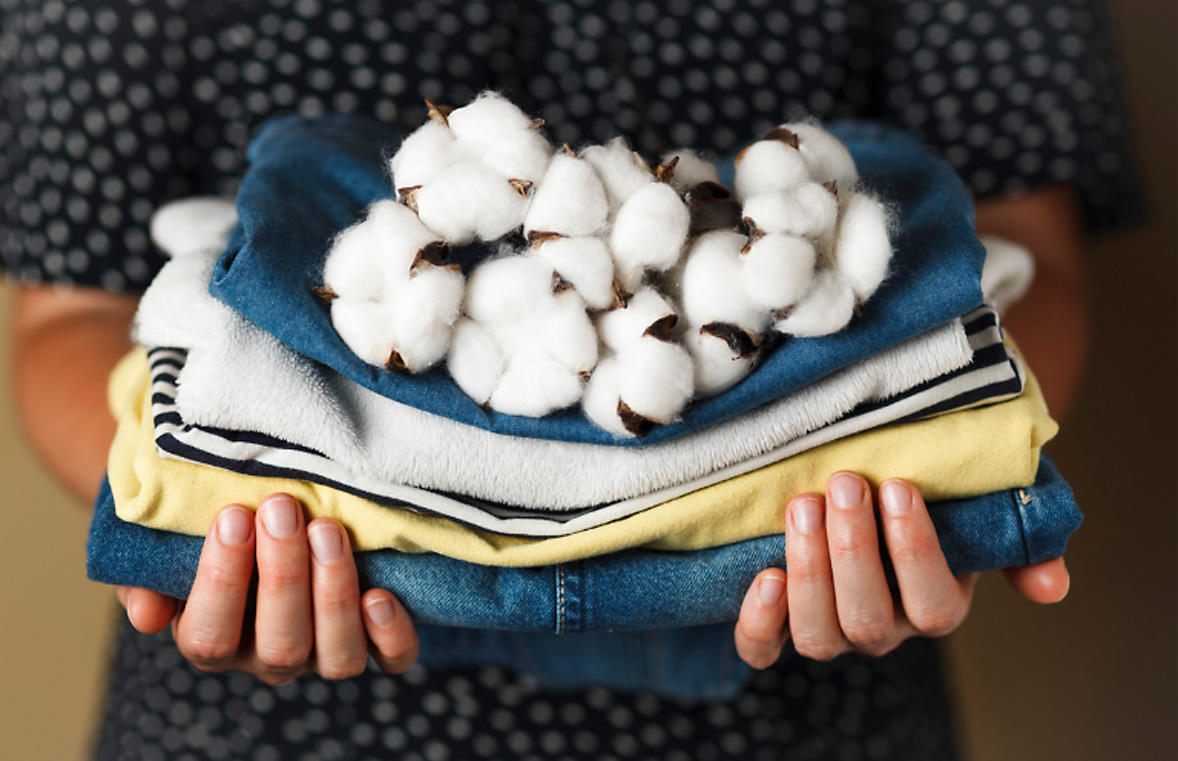
As sustainability and traceability became growing priorities in the apparel and home goods industry, Big W had made meaningful strides — yet research revealed a clear communication gap. Customers struggled to understand what terms like “sustainable” or “ethically made” actually meant and how these values translated across products, packaging, and digital touchpoints.
Product Concept
To bridge this gap, we conducted surveys to learn how Big W customers interpret sustainability messaging and where they seek product information. Insights showed a strong desire for clarity, consistency, and transparency in how sustainability stories are told.
We then ran in-depth interviews to understand how shoppers make sense of eco-labels, online descriptions, and in-store signage — uncovering both confusion and a genuine curiosity to engage when information felt trustworthy.
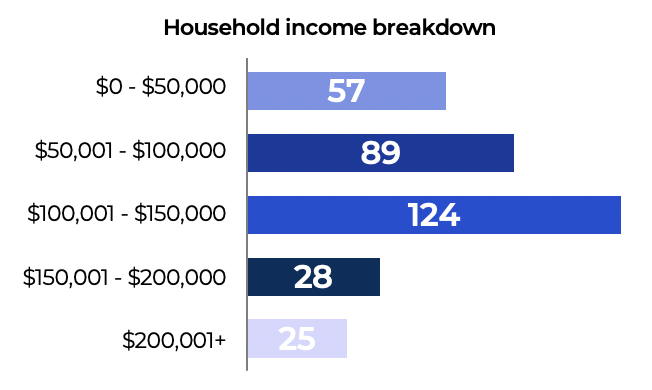
Household Income Breakdown
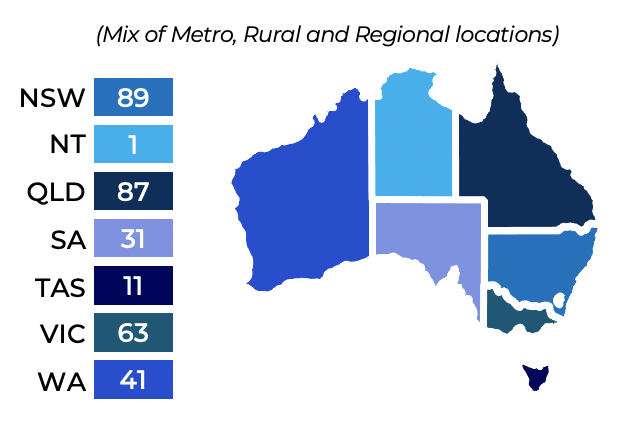
Participant Geography Breakdown
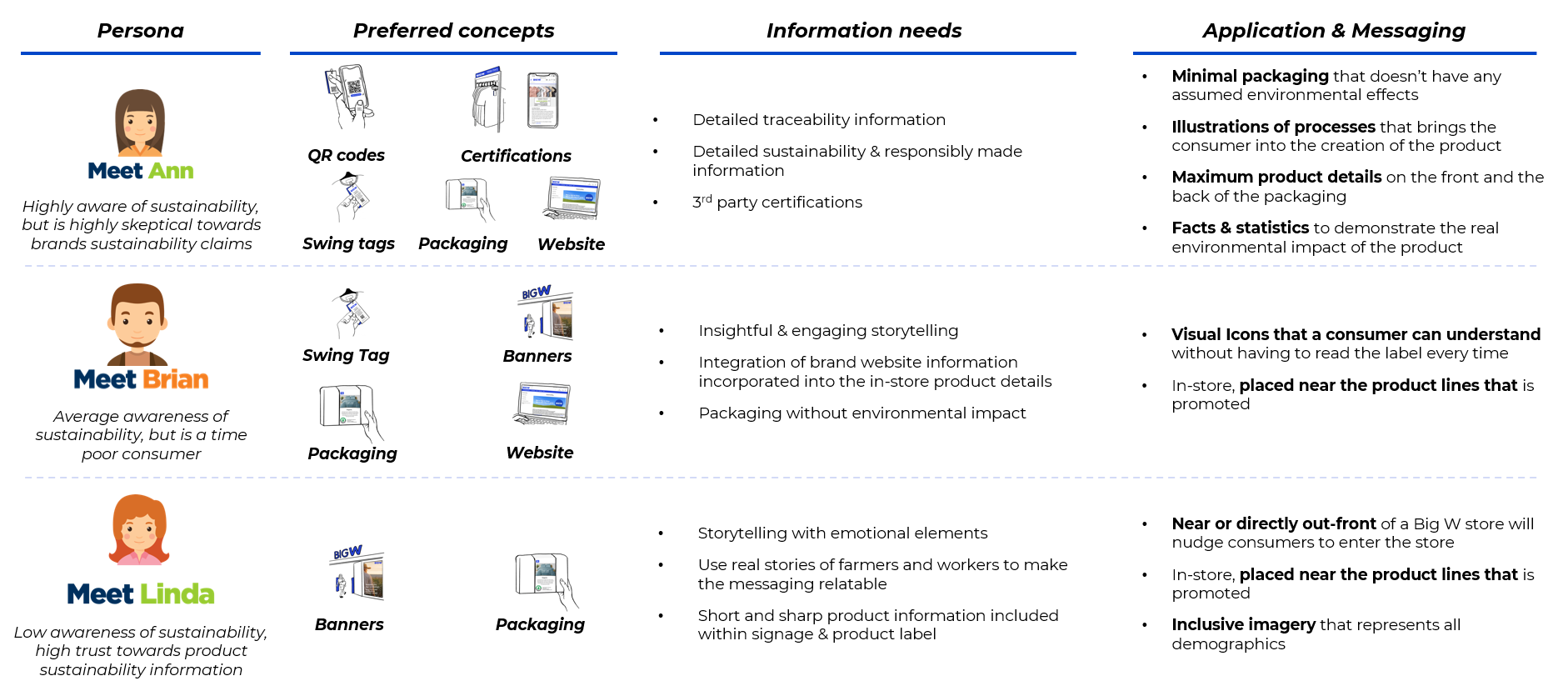
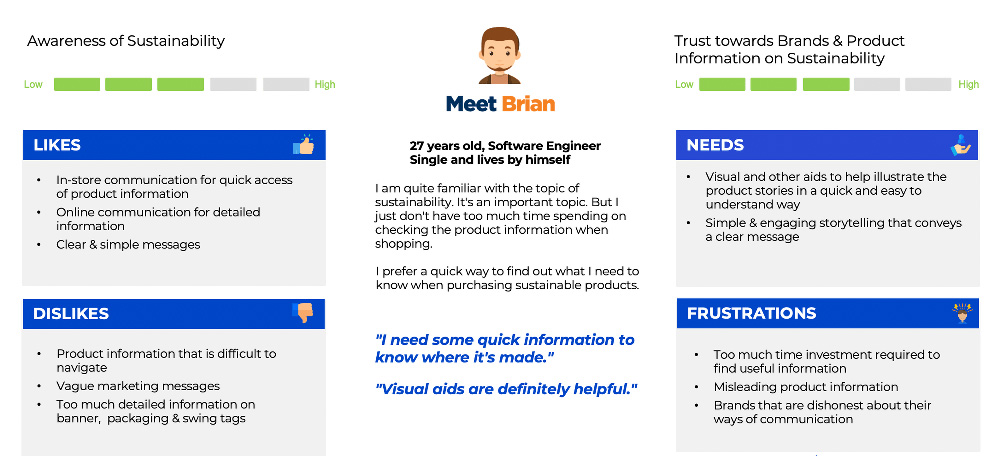
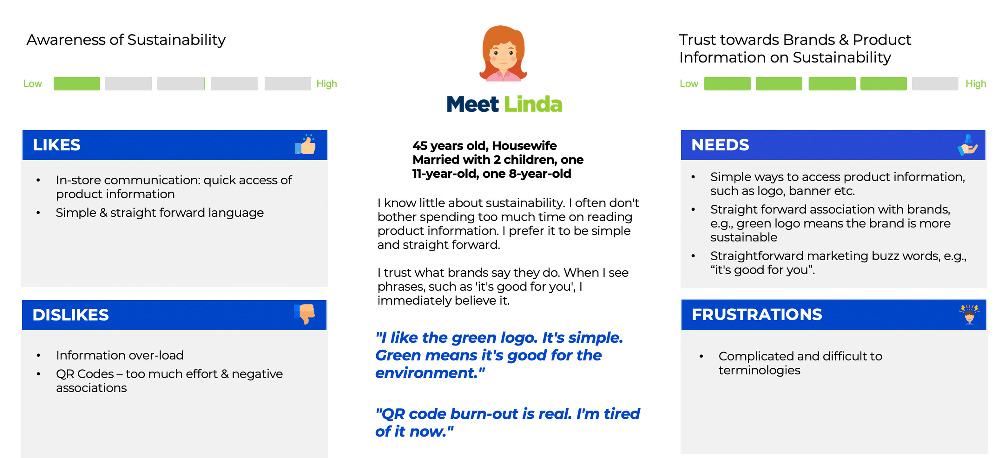
Through affinity mapping, we synthesized user needs and pain points, leading to the creation of three key personas that captured distinct consumer motivations and guided our ideation process.
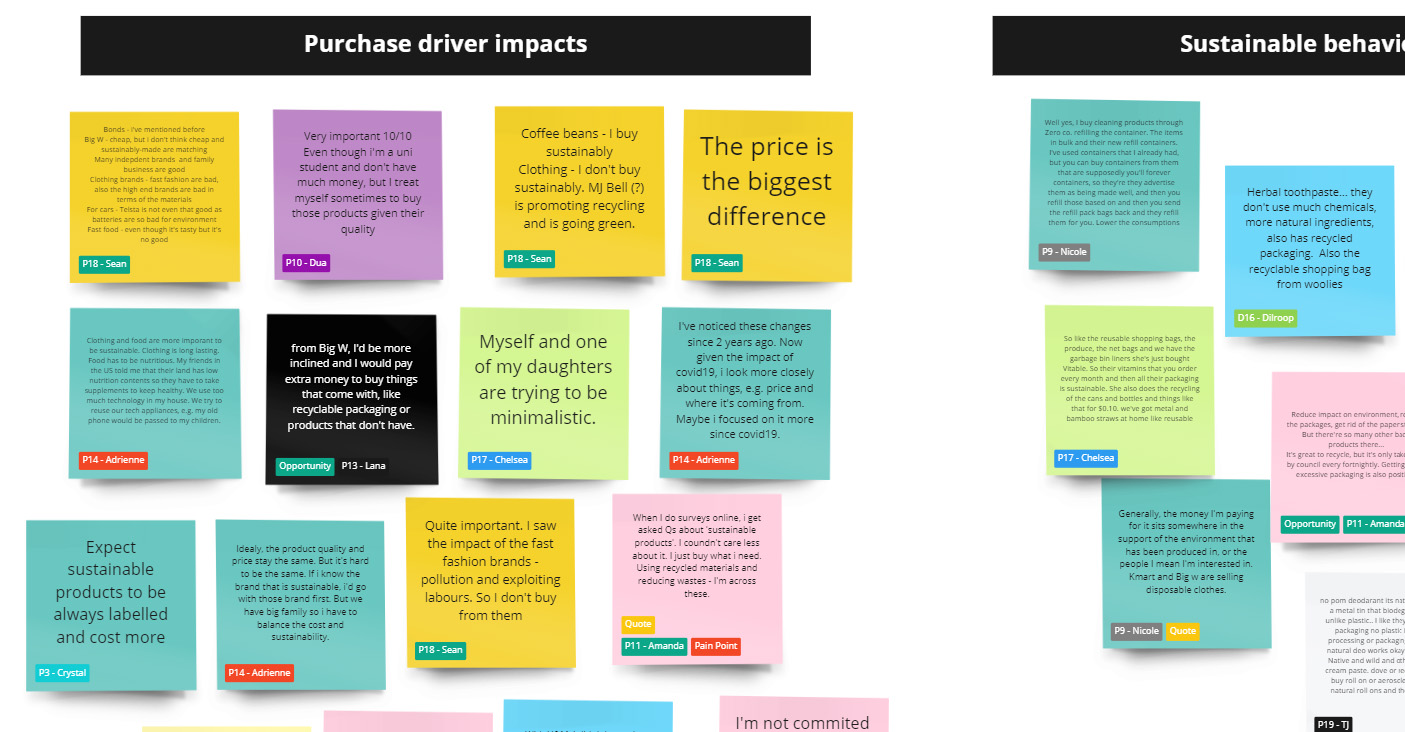
Affirnity Mapping
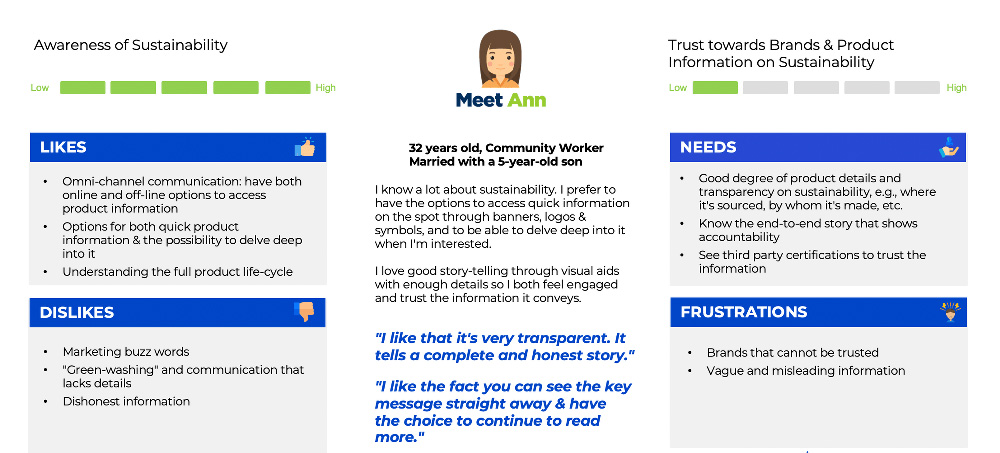
Persona 1
Persona 2
Persona 3
Using these insights, we developed and storyboarded four concept directions exploring how Big W could communicate sustainability both online and in-store. We tested these through focus groups to refine the visual language, messaging tone, and overall user experience.
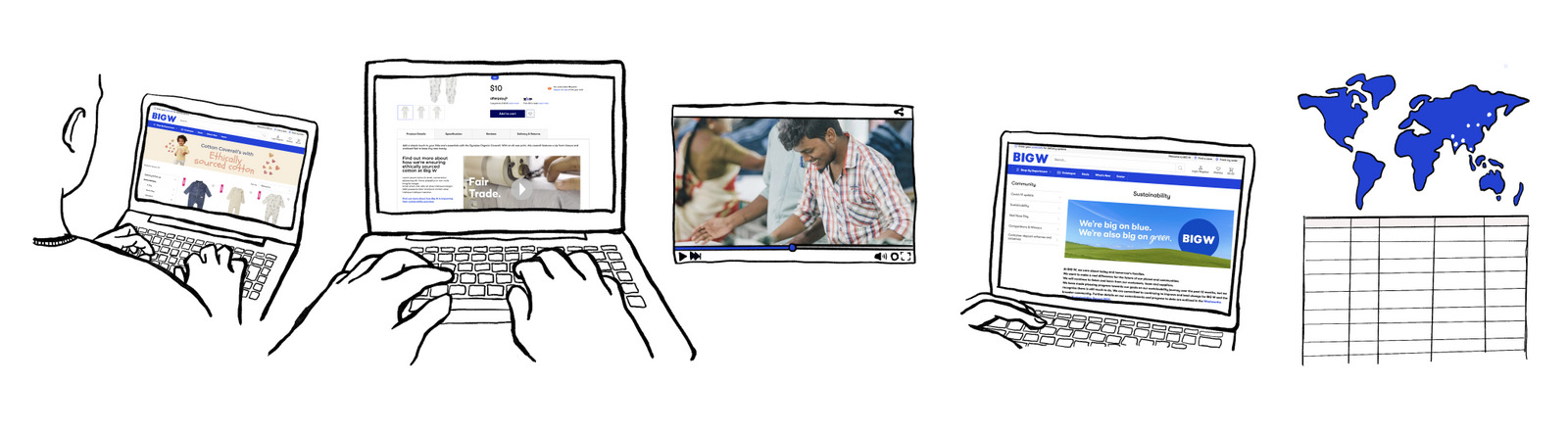
Storyboard 1
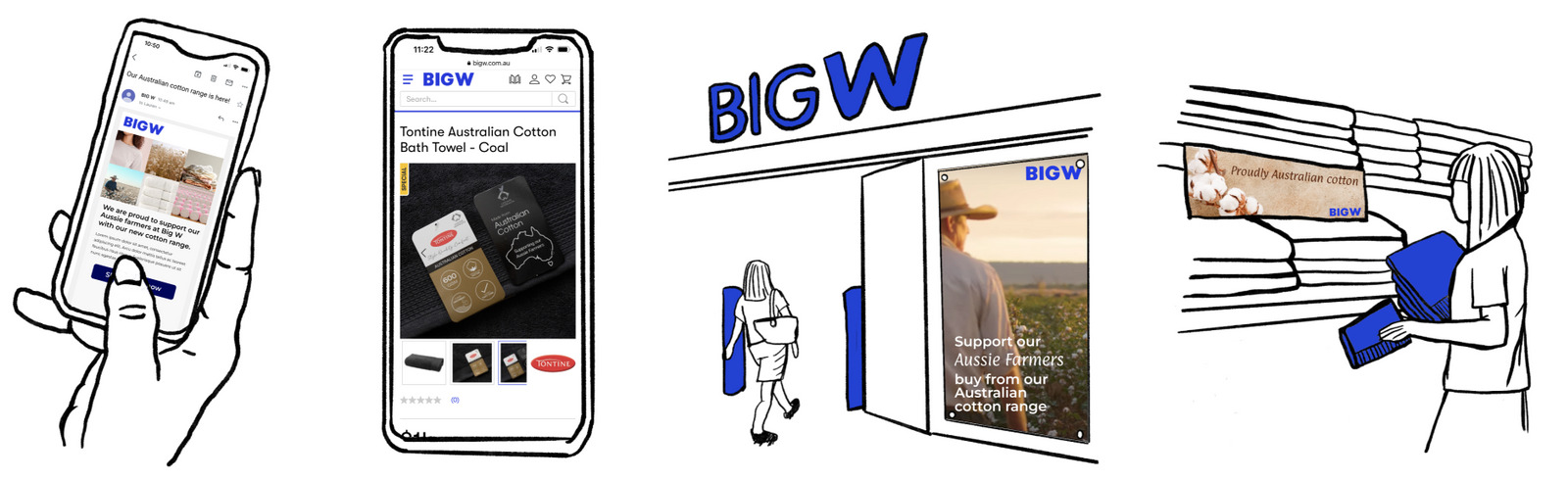
Storyboard 2
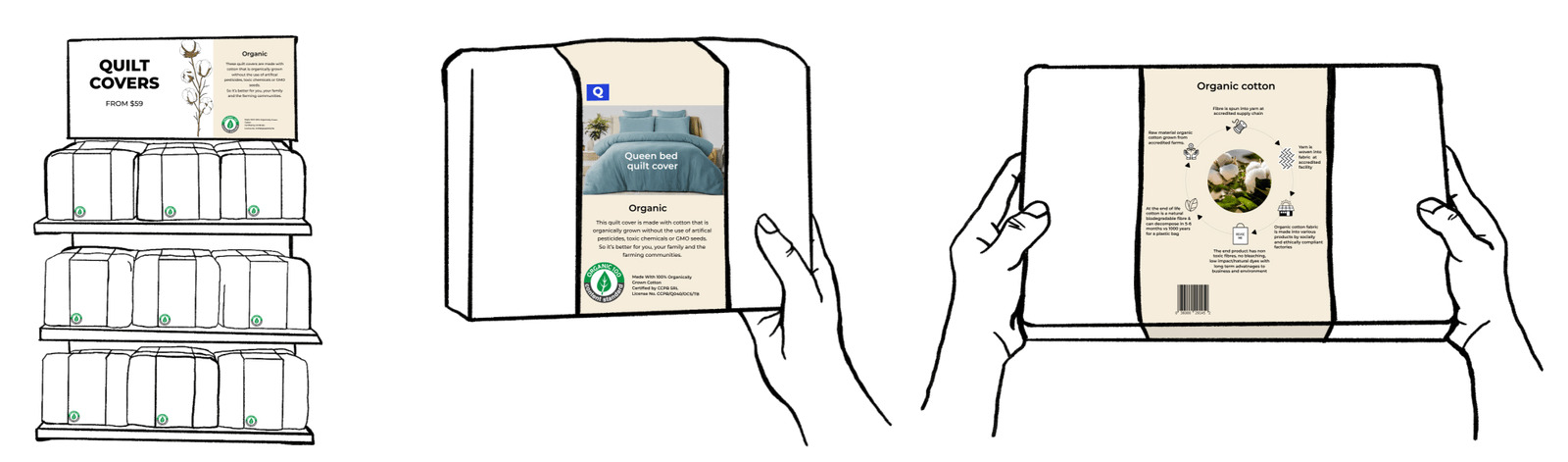
Storyboard 3
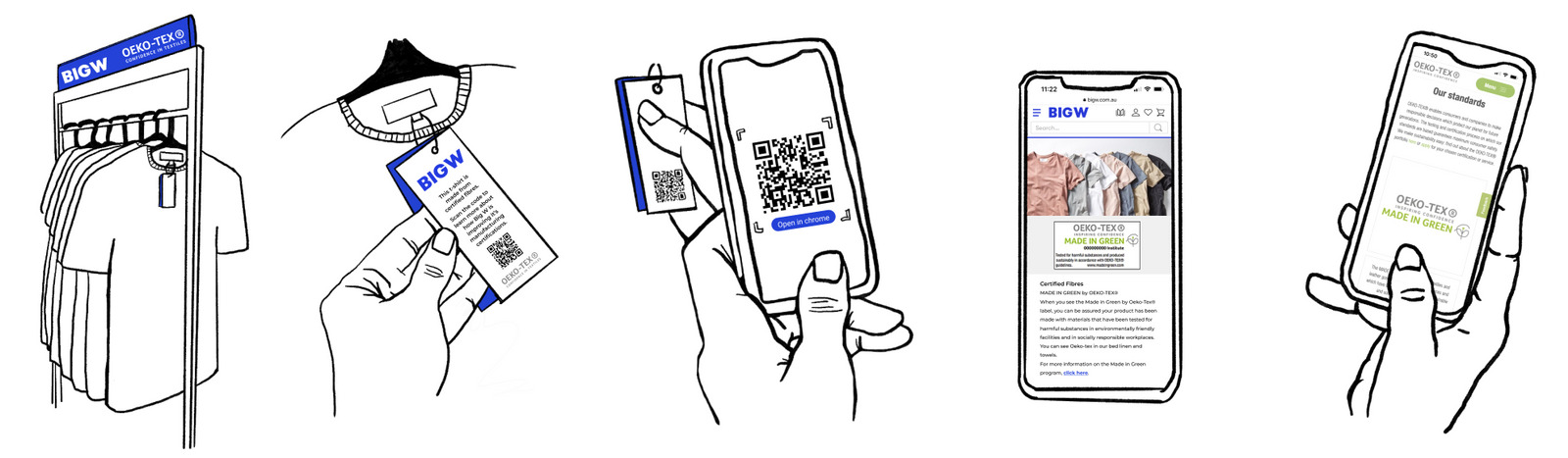
Storyboard 4
The proposal advanced the project into its next development phase — positioning Big W, one of Australia's largest retailers, to surface product sustainability and traceability information at scale across its national store network. Recommendations spanned digital product features (interactive traceability on product pages), packaging communication, and in-store signage — validated through focus groups before handoff to the client team. The work demonstrated that customers were ready to engage with sustainability information when it was presented clearly and consistently, shifting the framing from a compliance exercise to a customer experience opportunity.
Final Product Recommendation
Working with stakeholders across product, sustainability, and operations teams reminded me that aligning diverse perspectives is essential for meaningful change. By grounding our work in customer journeys and staff realities, we were able to surface practical opportunities for sustainable impact, without adding friction to the shopping or business experience. It reinforced the value of systems thinking and empathetic facilitation when tackling complex, cross-functional challenges.
Reach out to discover how we can collaborate.
Contact Me